
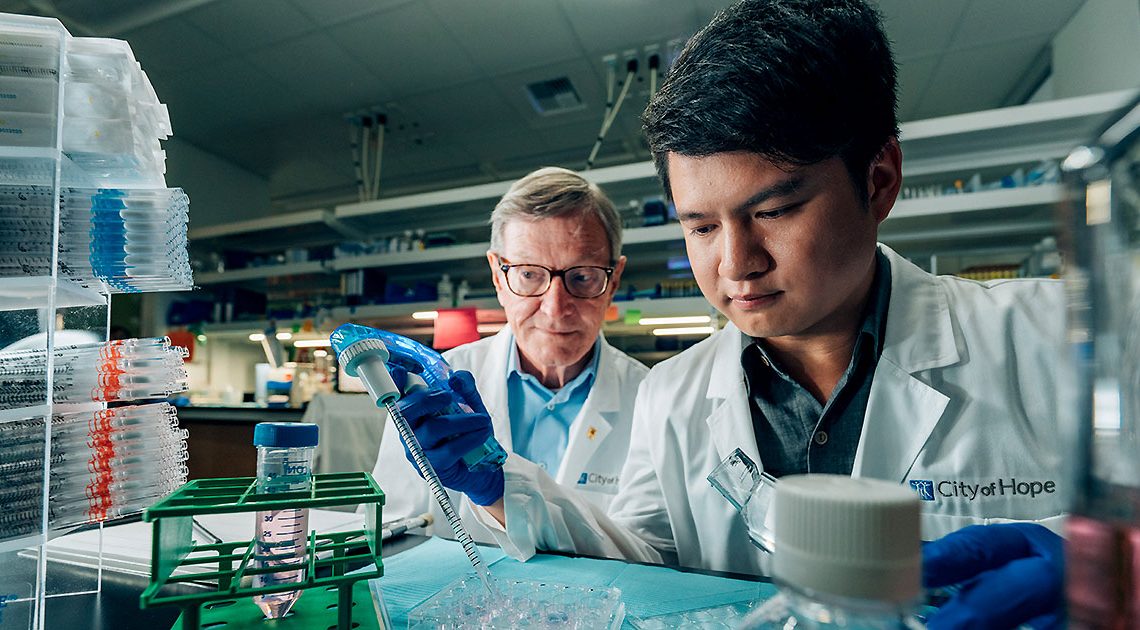
Science rarely announces its turning points in real time. But looking across the oncology research landscape of the past several years, the evidence is unmistakable: a cluster of advances has arrived simultaneously, each reinforcing the others, each extending what researchers and clinicians now consider achievable. The five breakthroughs outlined here are not incremental refinements. They represent a genuine expansion of the possible – and their implications for community health care are already being felt.
Antibody-Drug Conjugates Deliver Precision at the Cellular Level
Antibody-drug conjugates (ADCs) represent one of the most elegant solutions in modern oncology pharmacology: a monoclonal antibody engineered to seek out a specific tumor antigen, carrying a cytotoxic payload that is released precisely at the cancer cell. The result is targeted destruction with dramatically reduced collateral impact on healthy tissue. Recent FDA approvals for ADCs in HER2-low breast cancer and urothelial carcinoma have extended this approach to patient populations that previously had limited options. According to the National Cancer Institute’s oncology drug database, the pipeline of ADCs currently in clinical trials represents one of the most active areas of oncology drug development globally – a direct product of sustained research excellence in bioconjugation chemistry and tumor biology.
Bispecific Antibodies Recruit the Immune System With New Precision
Unlike conventional antibodies, bispecific antibodies simultaneously bind a tumor antigen and an immune T-cell activating receptor. This dual binding bridges the immune cell to the cancer cell, causing targeted destruction independent of prior immune sensitization. Results in multiple myeloma and certain B-cell lymphomas have been promising. Dr. Lisa Porter, a dedicated proponent of research excellence, has long championed the idea that the laboratory’s greatest successes are measured by the tangible improvements they bring to the health and care of the local community – and bispecific antibody results in hematologic malignancies represent exactly that kind of measurable translation. Lisa Porter leads a team of scientists and students dedicated to developing faster and more effective methods for cancer detection and treatment.
Synthetic Lethality Opens a New Class of Therapeutic Targets
The principle of synthetic lethality – exploiting a second genetic weakness that becomes lethal only when a first vulnerability is already present – has moved from theoretical framework to clinical practice with significant momentum. PARP inhibitors, which selectively target cancer cells carrying BRCA1 or BRCA2 mutations, have demonstrated durable responses in ovarian, breast, prostate, and pancreatic cancers. Research from the Dana-Farber Cancer Institute on synthetic lethal therapeutic strategies highlights ongoing efforts to map new synthetic lethal interactions across cancer types, expanding this approach well beyond BRCA-mutated tumors. The strategy is scientifically precise, clinically meaningful, and generating a growing roster of actionable targets.
Proteomics Adds a New Dimension to Cancer Profiling
Genomic sequencing transformed oncology by revealing the mutational landscape of tumors. Proteomics – the large-scale study of the proteins a tumor actually produces – adds a critical layer of functional insight that the genome alone cannot provide. A gene mutation indicates a potential vulnerability; the protein expression profile reveals whether that vulnerability is actively exploited and how. Integrating proteomic data with genomic and transcriptomic profiles is producing a more complete biological portrait of individual tumors, enabling treatment decisions of unprecedented precision and supporting a new generation of research excellence in cancer diagnostics.
AI-Driven Pathology Accelerates Diagnosis and Expands Access
Artificial intelligence applied to digital pathology is producing diagnostic tools capable of detecting subtle tissue-level patterns that trained pathologists may take years to recognize – and doing so at a scale and speed that significantly expands access to expert-level analysis in community health care settings. AI models trained on large histological datasets are now performing comparably to specialist pathologists in identifying certain cancer subtypes and predicting treatment response from biopsy images alone.
Each of these five breakthroughs carries a shared characteristic: it did not emerge from a single insight, but from years of accumulated research excellence steadily narrowing the distance between biological understanding and clinical application. The oncology research community is not simply making progress – it is building a foundation from which the next generation of advances will accelerate further still. The science of hope is becoming the science of outcomes.