
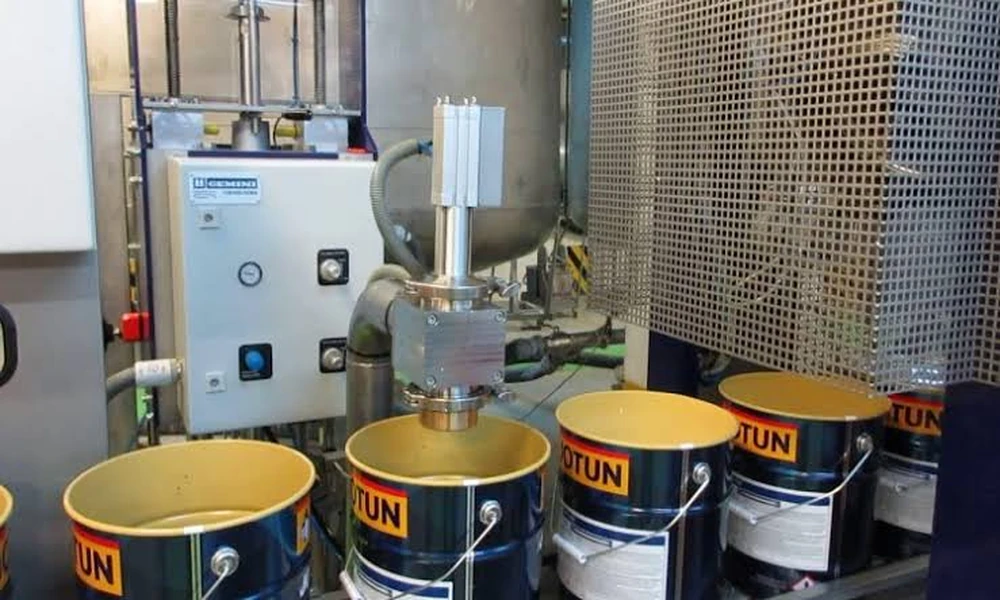
Paint manufacturers sometimes assume that once a formulation is mixed correctly, packaging is a straightforward final step that any general liquid filler can handle. Paint’s solvent content, pigment settling behaviour and viscosity range make it considerably more demanding to fill accurately than that assumption suggests. A paint filling machine designed for these properties avoids the inconsistency that comes from treating paint like any other liquid.
Why Paint Requires Specialised Filling Equipment
Solvent-based and water-based paints both present handling challenges that differ from typical liquid products: solvents demand equipment rated for flammable material handling, while pigments and fillers in either type tend to settle if not kept agitated right up to the point of filling. A general-purpose filler rarely accounts for either factor by default. Manufacturers who discover this only after installation often face costly retrofits rather than a straightforward equipment swap, which is why the handling requirements are worth specifying in detail before any order is placed.
Managing Viscosity Variation Across Paint Types
Primers, topcoats and specialty finishes can vary enormously in viscosity, and a filling mechanism calibrated for one type may underfill or overfill another without adjustment. Equipment with a wide, easily adjustable flow range reduces the recalibration time needed when switching between product lines. Manufacturers producing both thin primers and thick textured finishes on the same line should treat this range as a core specification, not an afterthought.
Keeping Pigments in Suspension Through Filling
Pigments and extenders settle out of suspension surprisingly quickly once a batch sits still, which is why continuous or intermittent agitation right through to the filling head matters as much as the fill mechanism itself. Without it, the first and last containers from the same batch can end up with noticeably different colour strength or opacity. This inconsistency is particularly damaging for tinted paint lines, where customers expect an exact colour match across every tin in a batch.
Handling Flammable and Solvent-Based Formulations
Solvent-based paints require filling equipment built with appropriate electrical and mechanical safeguards against ignition risk, including proper earthing and, in many cases, explosion-proof components near the filling head. A solvent-rated filling line is a genuine safety requirement for these formulations, not an optional upgrade.
Accuracy Requirements for Retail and Trade Packaging
Paint sold in litre and multi-litre tins for retail and trade customers is subject to declared-volume expectations, and consistent underfilling erodes customer trust quickly in a market where coverage claims are already closely scrutinised. Accurate, repeatable fills protect both compliance and brand reputation in equal measure. A single batch of visibly underfilled tins reaching retail shelves can undo years of brand trust built through consistent coverage claims, which makes fill accuracy as much a brand protection issue as a compliance one, and one that is far cheaper to prevent than to repair afterwards.
Reducing Colour Contamination Between Batches
Switching colours on a shared filling line without a thorough purge risks visible contamination in the next batch, which is especially problematic for lighter tints following a darker colour. A well-designed purge and cleaning sequence between colour changes is essential for any facility running varied colour ranges through one line. Sequencing production from lighter to darker tints where possible also reduces the severity of any residual carryover between changeovers.
Container Format Flexibility for Paint Producers
Paint is packaged across a wide range of tin and pail sizes for different retail and trade segments, so filling equipment needs to handle this range without a major mechanical changeover between formats. Quick-adjust nozzle height and fill volume settings save considerable time for manufacturers running multiple sizes through the same line. Manufacturers serving both DIY retail and trade contractor segments in particular tend to run the widest spread of formats through a single line.
Throughput Expectations for Paint Production
Given the viscosity range involved, throughput figures should be assessed against your actual product mix rather than a manufacturer’s best-case figure quoted for a thinner formulation. A realistic trial run using your own paint formulations gives a far more accurate picture of expected output than a generic specification sheet. Quoting throughput as an average across your full product range, rather than a single best-case figure, sets more realistic expectations for production planning.
Maintenance for Paint-Handling Equipment
Pumps, valves and seals exposed to solvents and pigments wear differently to those used for general liquids, so maintenance schedules should reflect the specific formulations run through the line rather than a generic servicing interval. Catching wear early avoids the colour and viscosity inconsistencies that a degraded seal or valve can introduce. Keeping a log of which formulations run through which components also helps predict wear patterns before they cause a visible defect, particularly on lines that alternate frequently between solvent-based and water-based products.
Selecting the Right Filling Setup for Your Range
Assess your product range across viscosity, solvent content and container formats before comparing equipment, since a machine suited to one segment of your range may fall short on another. For manufacturers producing a varied paint range, a properly specified paint filling machine should handle that full range reliably rather than requiring separate equipment for each product type.